Aga Maksimowska: A writer moving on from old selves and rejecting categorization
- Sheelagh Caygill

- Jun 27
- 4 min read
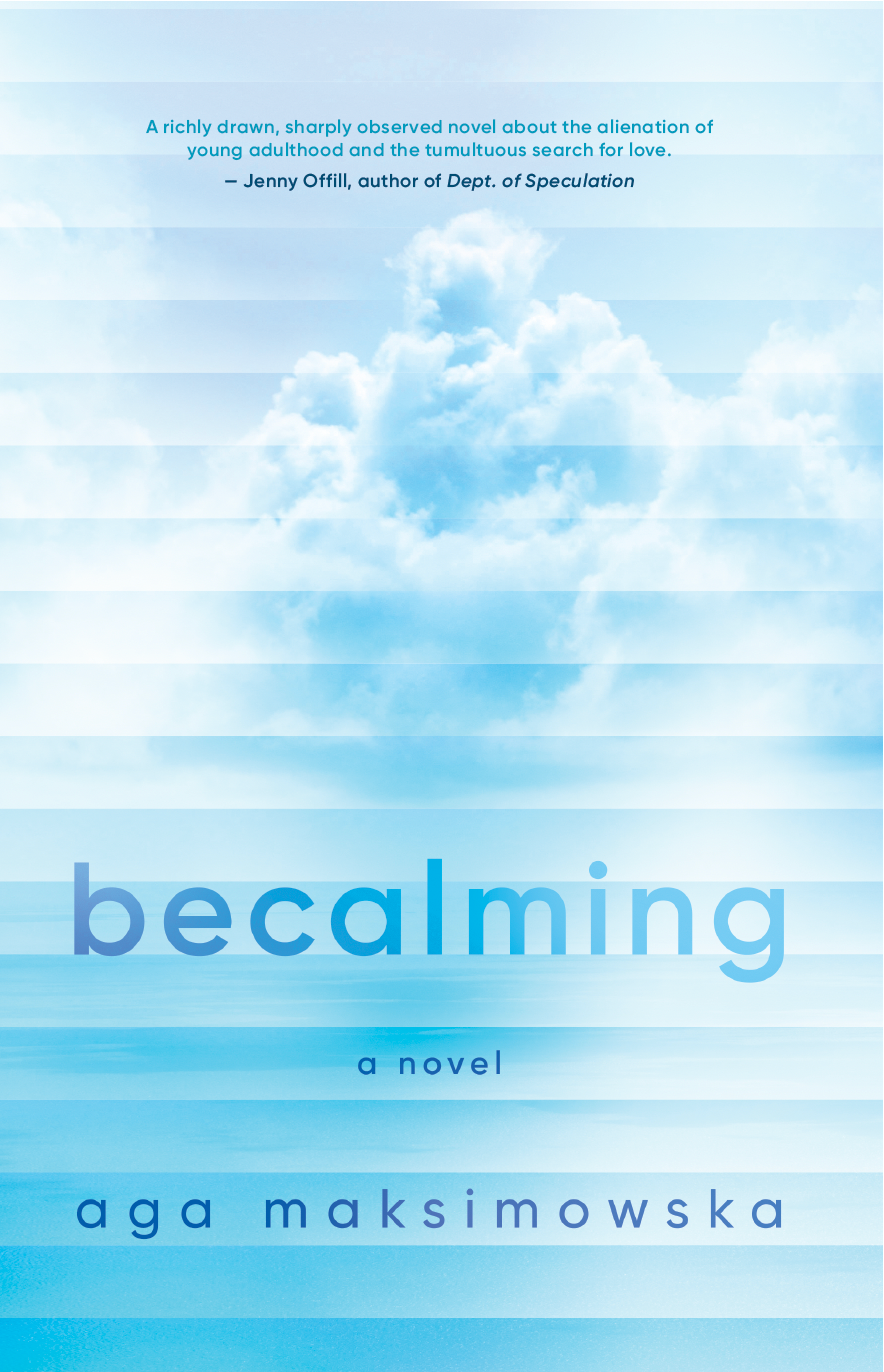
Aga Maksimowska is the author of GIANT, the 2013 Toronto Book Award finalist coming-of-age novel about premature sexual development and the fall of Communism in Poland. Her stories and essays have been published in Brick, The New Quarterly, The Humber Literary Review, White Wall Review, The Lincoln Review, Room, The Globe and Mail, and elsewhere. Her second book, BECALMING, was published in April. She lives in Toronto. Aga's answers look at how her writing has been influenced by her own life, not wanting to be pigeonholed, and how she is a writer moving on from old selves.

OCW: What life experiences have shaped your writing style?
AM: Even though the great Colm Tóibín tells us writers that the page we face is not a mirror, my writing has been influenced by my own life. By that I don’t only mean the things I’ve lived through or experienced, but also the time and place in which I have experienced them. I was raised in Communist Poland by survivors of WWII, and came to Canada as a child in an adult’s body. I will never not be that eleven-year-old who provoked surprised stares and concerned conversation. What’s wrong with her? My creative work has been a way to probe for understanding, to imagine possibilities and alternatives while examining competing truths.
A writer moving on from old selves
Writing has been an effort to mine nuance and empathy in a world of opinion and reaction. But isn’t that what all art is? I am not the same writer who wrote GIANT, and even the same one who, fourteen years later, published BECALMING. “The reality is, everyone outlives an old self, often more than once in the course of a reasonably long life,” wrote Susan Sontag in the introduction to Adam Zagajewski’s memoir Another Beauty. I am growing and changing, wearing and discarding different personalities. The next book is looking back into WWII, but also looking forward into a future that’s less nationalistic, nihilistic and navel-gazing.
Rejecting being pigeonholed: 'I wanted to be allowed to write whatever I wanted'
OCW: Can you trace any common themes across your writing?
AM: After I published GIANT, I had the negative physiological reaction of a young(-ish) writer who felt that she was being pigeonholed into ‘immigrant writing.’ There might have been a stomp and a pout or two. I huffed. I wanted to be allowed to write whatever I wanted, so I proceeded to write a manuscript that I thought would appeal to a larger audience, something less Eastern European. (In Poland the region we occupy is called Central Europe. Eastern Europe is elsewhere. I heard an Iranian scholar on the BBC once discuss the Middle East versus Western Asia, and I could relate).
When I wrote that manuscript that was supposedly untethered from my immigrant past, my mentor and friend, Camilla Gibb, said, “Who wrote this?” AI wasn’t a tool then, and yet I managed to somehow wash my creative writing of all personality and produce something saccharinely ChatGPT. It was an expensive, long lesson that I, as a writer, cannot shake Poland. The fatherland somehow creeps into all I write. It’s a part of me, like that prematurely developed body, like all my experiences with othering and abandonment, like my deep curiosity about science, how things work, and what’s going to happen next.
OCW: Which authors and/or types of books do you like to read?
AM: I love beautifully written books. I want to read books that make me stop, find my highlighter, mark a passage, then copy it out into my notebook because it’s so stunning or daring or inventive. Writers who’ve consistently done that for me over the years are Damon Galgut, J.M. Coetzee, Helen Humphreys, Jenny Offill, Jenny Erpenbeck, and Melissa Febos.
Navigating creative writing
OCW: Are you a plotter or a pantser?
AM: I am a plantser (apparently—I didn’t know that was a category until I looked it up). Early in my writing career, I was given the advice to always know my ending, which was the best writing advice I received. (Thank you, Helen Humphreys!) I wish I was a plotter since I have found that manuscripts have failed because I’ve flailed. But plotting too tightly would also kill the thrill for me as a writer, so I supposed the cost of living on the edge of plotting is dead manuscripts. I love exploring the unknown corners of a story or a scene. I don’t want to know each and every turn. But I do need to know the climax and the ending.
OCW: If you’ve been published, how did you find your first publisher?
AM: My first novel, GIANT, was my MFA thesis. Since I admired and respected my thesis advisor a great deal, I approached the publisher who put out her debut novel (Camilla Gibb’s Mouthing the Words). They said yes, so that worked out for me. Pedlar Press, which has since folded, put out beautifully designed books that were printed on gorgeous, heavy paper by Coach House Books. I loved the luxe feel of the book. GIANT has since gone out of print, which is terribly sad. My goal is to have the book reissued with a fresh new cover now that its sibling, BECALMING, is out in the world.


Comments