Lifelong lessons in the writing craft: An interview with Liisa Kovala
- Sheelagh Caygill

- Mar 5
- 4 min read
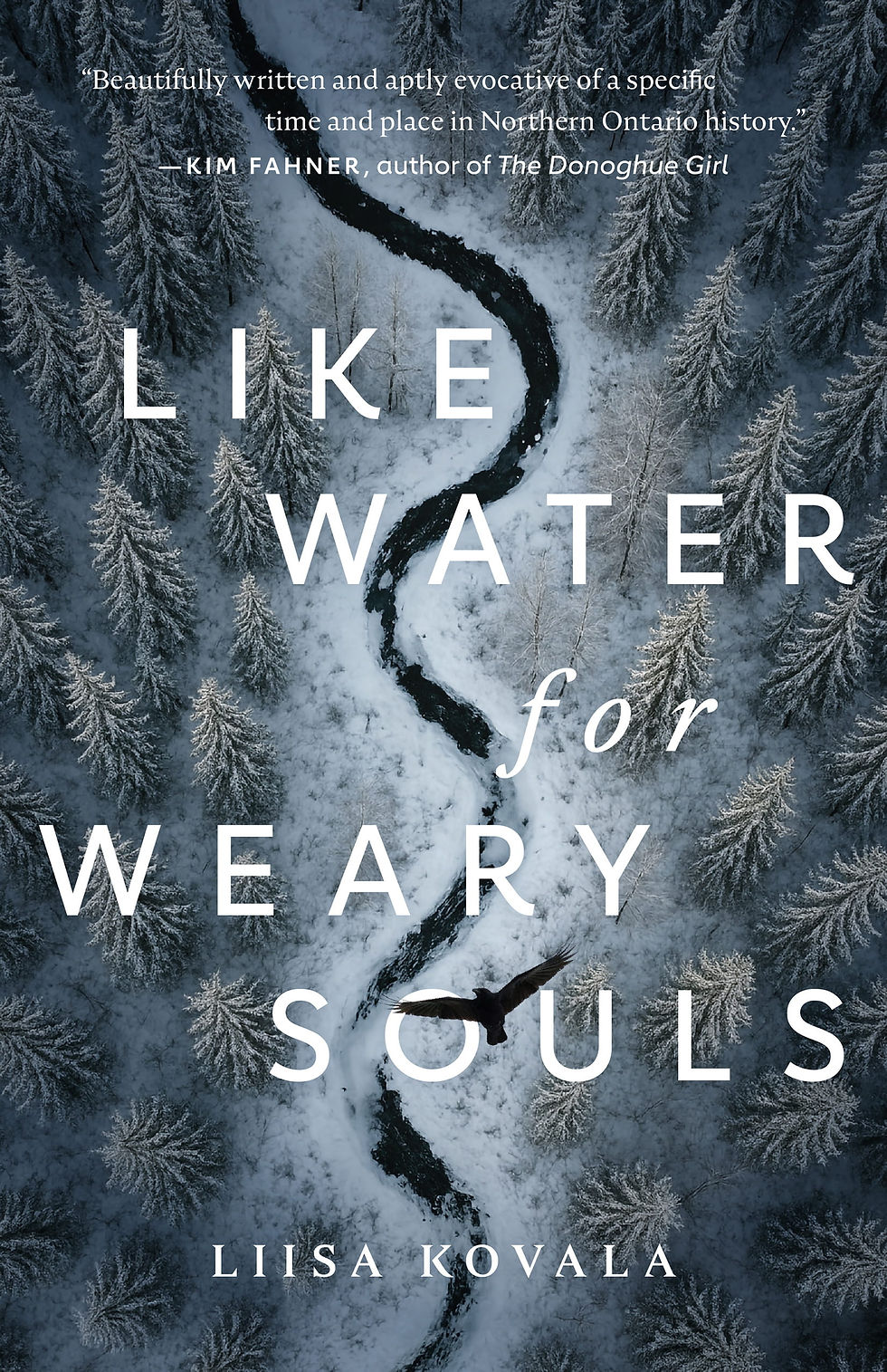
Liisa Kovala is a Finnish Canadian author, certified fiction and memoir book coach, and podcast host. Like Water for Weary Souls (2025) is her second historical novel, and winner of the Bronze Prize in the 2025 Global Book Awards.
Liisa's debut novel, Sisu’s Winter War, was released by Latitude 46 Publishing in 2022. Surviving Stutthof: My Father’s Memories Behind the Death Gate (Latitude 46, 2017) was translated and published by Docendo in Finland and short-listed for a Northern Lit award. Liisa’s short stories and creative non-fiction have been published in a variety of anthologies and literary magazines, and she received first prize in Geist’s 18th Annual Literal Literary Postcard Short Story Contest.
As a certified Author Accelerator fiction and memoir book coach, Liisa works with writers both in small group settings and individually. Liisa features fellow writers in her Women Writing newsletter, hosts the Women Writing Podcast and co-hosts Rekindle Creativity Women’s Writing Retreats. Learn more about Liisa at liisakovalabookcoach.com and visit liisakovalawomenwriting.substack.com.
Evolution and mentorship in the writing craft
OCW: Has your writing evolved over the years? If so, how has this happened? Through writing experience? By reading a lot? From writing courses, writing communities, or something else?
LK: My writing has evolved over a half-century! I started writing as a young kid, mostly drawing, and telling myself stories, and later putting stories onto paper. Studying English at university allowed me to delve into the cannon of English literature, and teaching English and Creative Writing to high school students let me explore my creative side.

When I started to take my own writing more seriously, I started by enrolling it a creative writing certificate program at University of Toronto where I worked with some of the most renowned Canadian authors. Later, I was fortunate to be mentored by acclaimed novelist Gail Anderson-Dargatz, and by Marina Endicott at Humber School for Writers where I earned a Graduate Certificate in Creative Writing.
Every class, mentorship, certification program, writing retreat, and author has taught me something about the craft or publishing industry. I truly believe we don’t know what we don’t know, so we must continually learn and engage with other writers, create writing communities, and further our education. It’s how we grow.
OCW: Do you use social media to engage readers, writers, or publishers and, if so, which platforms?
LK: I have a love/hate relationship with social media, as many of us do right now. About a year ago, I decided to get rid of some of the social media platforms that I wasn’t as engaged in and whittled it down to two: Instagram and Facebook, mostly because that’s where I spent the majority of my social media time and where I connect with family, friends, other authors, and readers. Overall, I’m surrounded by lovely, engaged, and engaging people who are supportive of what I’m doing. The negative part is the potential for doomscrolling, so I try to limit my time. The other platform I’m really enjoying is Substack. The vibe is friendly and encouraging, and I’ve made great connections there. I host my Women Writing newsletter through Substack, as well as my weekly Women Writing podcast. It also has a social media aspect called Notes, and that’s been fun, too. My paid subscribers also have access to me and time to write every Monday evening via Zoom. It’s a great way to get pages done while being part of a community of fellow writers.
The plantsing method: Balancing structure and exploration
OCW: Are you a plotter or a pantser?
LK: I have tried being a serious plotter and I’ve also tried pantsing, but what really works is something between the two. Some folks call it plantsing. For the last several books, I’ve used the strategy that I use with my book coaching clients. I work through Author Accelerator’s Blueprint for a Book by Jenny Nash first, making sure I have my foundational elements sorted out, then I move on to their Inside Outline in which I work out the basics of what happens in the story and why it matters to the protagonist.
Once that’s done, I feel confident that my story will hold together. However, having an outline doesn’t mean I don’t pants. Once I’m writing that first draft, I let myself explore the new ideas that inevitably come up, and adjust my outline accordingly. It’s a nice combination of having the safety net of an outline to return to every writing session, and the freedom to see where the character takes you.
Books spanning a wide range of genres
OCW: If you’ve been published, how did you find your first publisher?
LK: I self-published my first book about my father’s experiences as a prisoner in a Nazi concentration camp, and soon after a new publisher opened in my hometown, so I approached them. They decided to publish the book under a new title, Surviving Stutthof: My Father’s Memories Behind the Death Gate. A few years later, they published my debut historical novel, Sisu’s Winter War. For my third book, and second historical novel, I decided to try my hand at self-publishing again, this time with better insight into the publishing and marketing industry. Like Water for Weary Souls recently won a Global Book Award for Women’s Fiction! It was an easy decision to publish the Hygge House Cozy Mystery Series on my own, too. It gives me lots of freedom to make decisions about covers, layout, timelines, and marketing.
OCW: What advice/guidance would you give to writers?
LK: There is so much to learn as a new writer, and sometimes writers feel like they should know everything before they write or put it off until they have more time. My advice is to start before you are ready. While I believe in taking courses and webinars, joining writing communities, and hiring a book coach, I also know you can only learn to write a book by writing it. All the other strategies will come into sharp focus when you need to apply them to an actual manuscript instead of thinking about them theoretically. Start now. Don’t rush. Seek expert advice.


Comments