Author Maude Barlow: On turning complicated issues into bestselling stories
- Sheelagh Caygill

- Jun 10
- 3 min read
Maude Barlow is the bestselling author of 21 books, and her most recent is Earth for Sale: The Fight to Stop The Last Plunder of the Planet (ECW Press, 2026). She co-founded the Council of Canadians, chairing its board for over three decades, sits on the board of Food & Water Watch, and the board of advisors of the Global Alliance for the Rights of Nature.
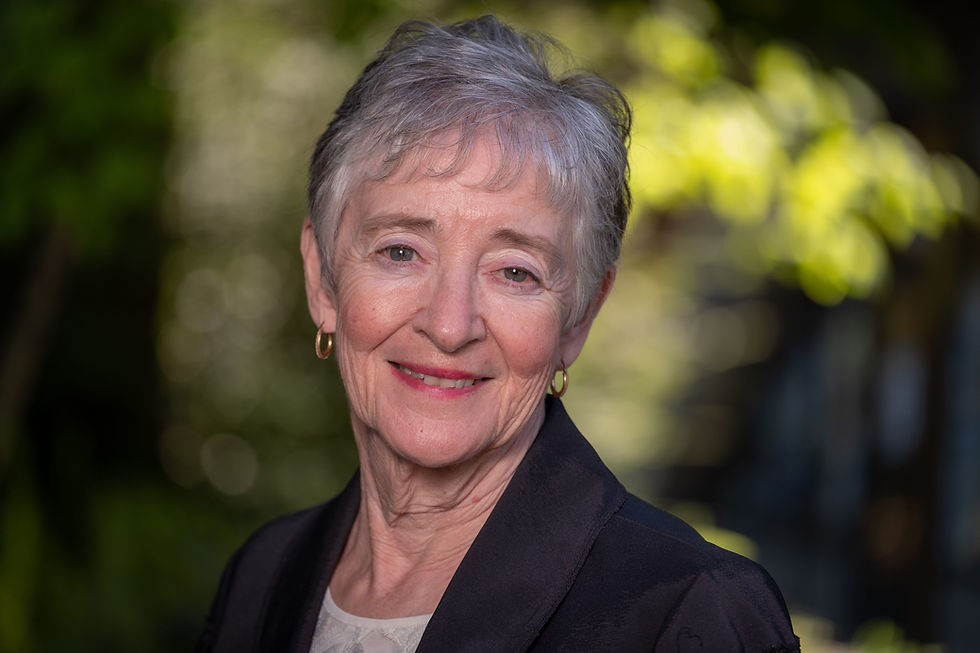
She served as senior water advisor to the UN General Assembly and was a leader in the campaign to have water recognized as a human right. She is the recipient of 17 honorary doctorates and many awards, including the 2005 Right Livelihood Award. Maude lives in Ottawa, Ontario. In this interview, Maude explores her writing process, a large part of which is focused on turning complicated issues into bestselling stories.
Inside Maude Barlow's writing process: from near-disaster to 21 books
OCW: What life experiences have shaped your writing style?
MB: Way back in the late 1980s, I was monitoring the changes to Canada brought by the Canada-US Free Trade Agreement (which I had vigorously opposed) and kept saying to anyone who would listen, “Someone needs to write a book on this!” Finally, people started saying the obvious - that I had to bite the bullet and do it myself. I had never learned to type and did not own a computer.
I bought a word processor and taught myself to type on it and launched into Parcel of Rogues. True story - No one told me to save as I wrote and of course there was no cloud. When I finished the book I pressed delete by accident and the word processor asked if I really wanted to delete my manuscript. Thankfully, I called my friend Bonnie whose husband was a computer whiz, and he told me under no circumstance was I to go back into my office. He then arrived with a bunch of floppy disks and saved my book many times over. So here I am - twenty one books, dozens of reports and countless op-eds later, still writing.

OCW: If you’ve been published, how did you find your first publisher?
MB: I sent a cold letter to Key Porter Books and got an immediate offer! Beat that!
Turning complicated issues into bestselling stories
OCW: Can you trace any common themes across your writing?
MB: All my writing is about social and environmental justice issues. I know when I start a book what I want to do but then I let it lead me. I learn so much from the experience every time. (Gloria Steinem says she writes what she wants to read).
I take complicated political issues and try to put them in language that is easy to follow. Often I have to teach myself about say, a complicated trade agreement, or some arcane environmental legislation. I work at it until I understand it and can pass my knowledge on. I tell stories - real stories of real people - always. The topics of my books are often difficult and so I humanize my books as much as is possible for non-fiction.
Silencing the perfectionist: advice on editors and getting started
OCW: What advice/guidance would you give to writers?
MB: Don’t think you have to have the perfect book in your mind before you sit down to write. Trust yourself. I expect for fiction writers this is more true and the story can grow and change as you write. For non-fiction writers - or at least for me - it is important that I am organized into chapters and chapter topics before I start writing. But even then, the search for perfection can stall you. I know many would-be writers who keep putting off their books because they still have “things to learn.” Well we all do. Don’t let that stop you. Don’t let the goal of perfection prevent you from trying.
OCW: Do you edit as you write, or write and edit later?
MB: I have had excellent editors over the years and I totally trust them. Of course you don’t like them while they tear your “perfect’ manuscript apart; but you love them when you see the improvements they made. I am so used, for instance, to hearing ECW’s Susan Renouf in my head when I write that I edit on her behalf now! I will say to myself as I write, “Susan will take that out.” Or “Susan will say that you are getting ‘listy’.” Or “Susan will ask you to back this up.” She lives in my head. Always.


Comments