Jennifer Bowering Delisle on the threat of gen AI, hybrid forms, and literary community
- Sheelagh Caygill

- Mar 8
- 4 min read
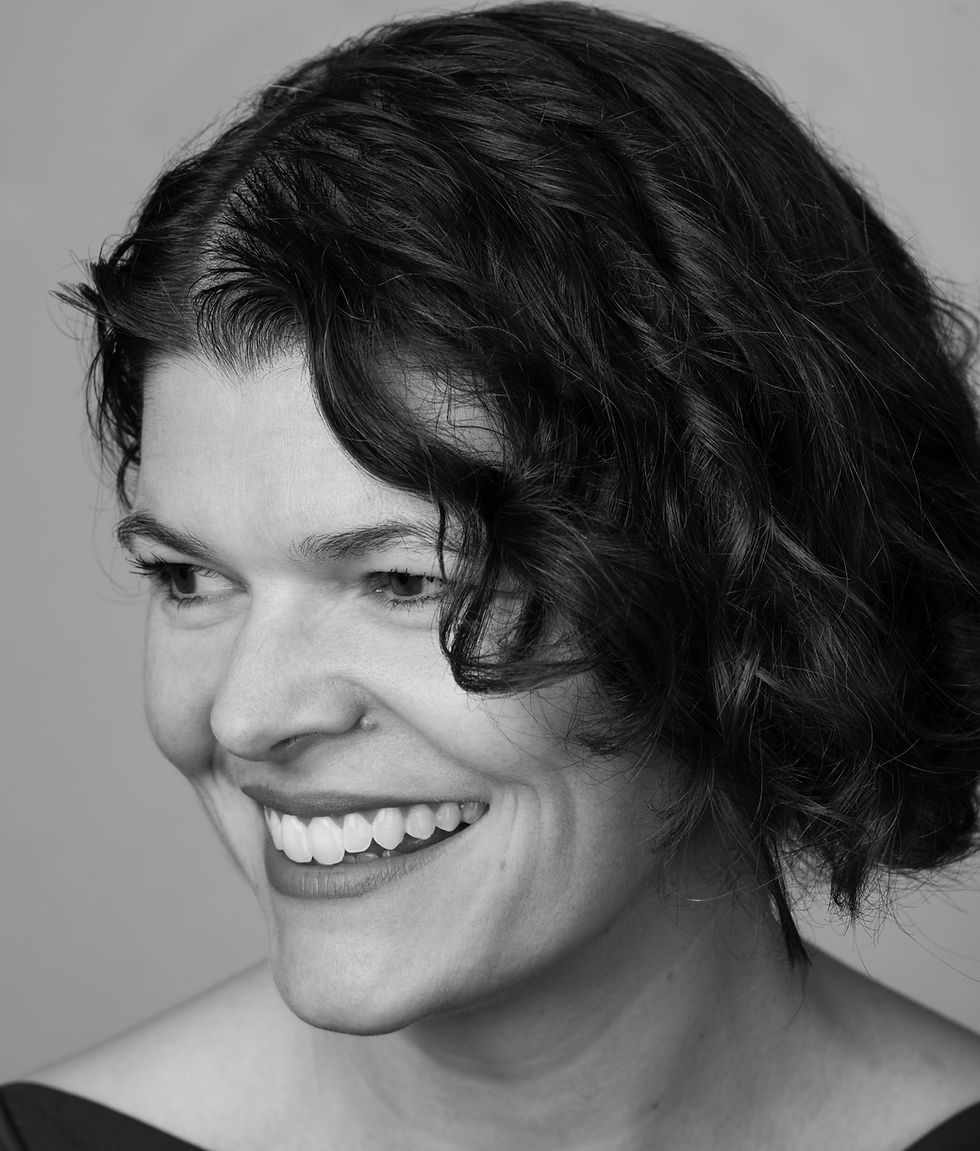
Jennifer Bowering Delisle's new poetry collection is Stock (2025), a response to stock photography. Her book of lyric essays, Micrographia (2023) won the Robert Kroetsch City of Edmonton Book Prize and the Writers Guild of Alberta Memoir Award. She is also the author of Deriving, a collection of poetry (2021) and The Bosun Chair, a lyric family memoir (2017). She is on the board of NeWest Press and lives in Edmonton on Treaty 6 territory. In this interview, Jennifer explores how the transformational power and importance of hybrid forms and literary community. She also articulates what the majority of creative writers writers think and feel about the thread of AI. Find Jennifer at jenniferdelisle.ca.
The evolution of voice through hybrid forms and literary community
OCW: Has your writing evolved over the years? If so, how has this happened? Through writing experience? By reading a lot? From writing courses, writing communities, or something else?
JBD: I think that every writer’s work will evolve over time in a multitude of both subtle and profound ways. Two tangible shifts come to mind in my own career. The first was when I embraced hybrid forms.
My first book, The Bosun Chair, began as my Master’s thesis as a straightforward family memoir. I set the manuscript aside for years while I did my PhD in English—it just never felt quite right. I was also writing poetry throughout those years, but as a completely separate genre. When I started to bring the two together and embrace the messiness of a hybrid form—with the help of a lot reading—it felt like I finally found my voice.
JBD: The second big shift that comes to mind is when I was working on my most recent poetry collection, Stock. I started with the concept of responding to stock photography—a subject matter that demanded more playfulness and experimentation than my usual work. I got painfully stuck several times along the way. Working with a mentor—Gary Barwin through the Vancouver Manuscript Intensive Pro Program—helped me find my way to a freer process. I feel like that’s an evolution that’s still in progress.
Exploring the threads of human connection

OCW: Can you trace any common themes across your writing?
JBD: If I had to choose a single idea or concern that tied most of my work together, it would be human connection. So much of my work is preoccupied with family connections across generations—ancestral ties, mothering, the death of my own mother. But I also write a lot about connections between strangers—common experiences of love or loss and how we recognize each other across difference and distance. I’m interested in how much we can know another human, from the people we pass on the street to the people with whom we share our homes and our bodies.
OCW: What advice/guidence would you give to writers?
JBD: Find your community! It’s essential to have people you trust around you, to workshop new work, to talk through the ins and outs of publishing and marketing (there’s no manual), and to support you through all the ups and downs. A strong community—not a network—does so much more than just buying and boosting your work. They remind you that we are not in competition, but all benefit from a shared abundance of creativity. Many writers have introverted tendencies, and we mostly work in isolation. But there are many writers looking for a writing group, so don’t be shy—sometimes all you need to do is ask. Be patient and committed—building a strong community takes time and conscious effort.
'Terrifying' threat of generative AI
OCW: Do you see generative AI as a benefit or a threat to writers?
JBD: Most generative AI is built upon a foundation of theft. I can’t see how a system that steals our work without acknowledgment or compensation and feeds it back to us in a distorted form, devoid of real human concerns, all while accelerating our climate crisis, can be anything but a terrifying threat. AI is never going to stop artists from creating art or doing so with passion and creativity. But it does have real potential to flood markets with slop, eliminating publishing opportunities, devaluing human thought and creativity, and eroding readers’ trust, discernment, and access.
OCW: Do you edit as you write, or write and edit later?
JBD: I tend to do a combination of both. I tend to write slowly initially, making little tweaks and adjustments as I go, and then do several more rounds of editing after I have a complete first draft. I do think this means that I get in my own way a little, and I am actively working on editing less as I write and letting thoughts and lines flow more freely. But I also strongly believe that there is no right way to write, and everyone needs to find their own process. I’ve never been able to set a timer and free write for a set amount of time, as so many writers advise. It just doesn’t work for me, and that’s okay.


Comments